LOS ANGELES — Hasbro Entertainment, the production company behind the upcoming HBO series based on Baldur’s Gate 3, has posted a casting call for actors with unshaven and uncircumcised penises, sources confirm.
“I’ve worked with HBO before, so I understand and appreciate their process,” said executive producer Craig Mazin. “They always start with the genitalia and work backwards. It may seem strange, but you can’t argue with the results. They make hits. Even on The Last of Us, where we had extensive source material to work with, they wanted us to diagram every P and V in the show. You wouldn’t believe the late night arguments Neil Druckmann and I got into about whether Joel leaned left or right, but it ultimately informed his character. I’m grateful that Baldur’s Gate has templates for us to use.”
Some actors said they were willing to take drastic measures to secure a part on the highly-anticipated series.
“I actually just scheduled my adult circumcision today,” said Cameron Steele, 26, an aspiring actor. “My family thinks I’m crazy, but this is a competitive industry. Besides, it isn’t the craziest thing I’ve done for a part. Hell, I had my ears surgically modified into points when I auditioned for The Legend of Zelda, and I still didn’t get that part. I’m desperate. If they said the role required castration, I’d consider it.”
Swen Vincke, founder and CEO of Larian Studios and director of the Baldur’s Gate 3 video game, said he was happy to have a development partner who was taking the project so seriously.
“It just tells me that they’re fans,” said Vincke. “They pay attention to the lore. Sure, everyone’s Tav is different. There is no canonical race or class. But whether Tav is a halfling rogue or a tiefling sorcerer, they one-hundred-percent have a bush. That was our vision for the character, and I’m thrilled that it’s being preserved for the show.”
At press time, Hasbro had altered certain details of the posting after discovering they had accidentally installed a “Big Penis” mod.
CHICAGO — McDonald’s had unfortunate news for fans anticipating its Big Arch, with the company revealing this morning that the new product had failed to reach 5,000 concurrent eaters.
“I know our fans around the world were refreshing RestaurantDB over the weekend, but unfortunately, we’ve failed to reach our target,” CEO Chris Kempczinski said. “Even at its peak hours over the weekend, we failed to cross 5,000 CCEs, when we’re usually floating around 3,500 by lunchtime. We’re very sorry to the fans who, more than a good burger, wanted a popular one.”
Armchair analysts on social media were quick to pile on the fast food giant.
“What are they doing over there?” one Bluesky post said. “They didn’t even advertise this anywhere. There’s so many good burgers out there, and they’ve even made some of them. Yet they put this out there and expect us to flood the drive-thrus and make their stats look good? Yeah, right. They had less concurrent eaters than the Arby’s Meat Mountain, but I’ve heard it’s just a crypto scam affecting the numbers or something.”
At press time, an AI-generated LinkedIn post beginning with “Is McDonald’s Dying? Their Burger Lost The War To a Restaurant Made By A Guy in His Basement” was becoming the most viewed post on the platform for the day.
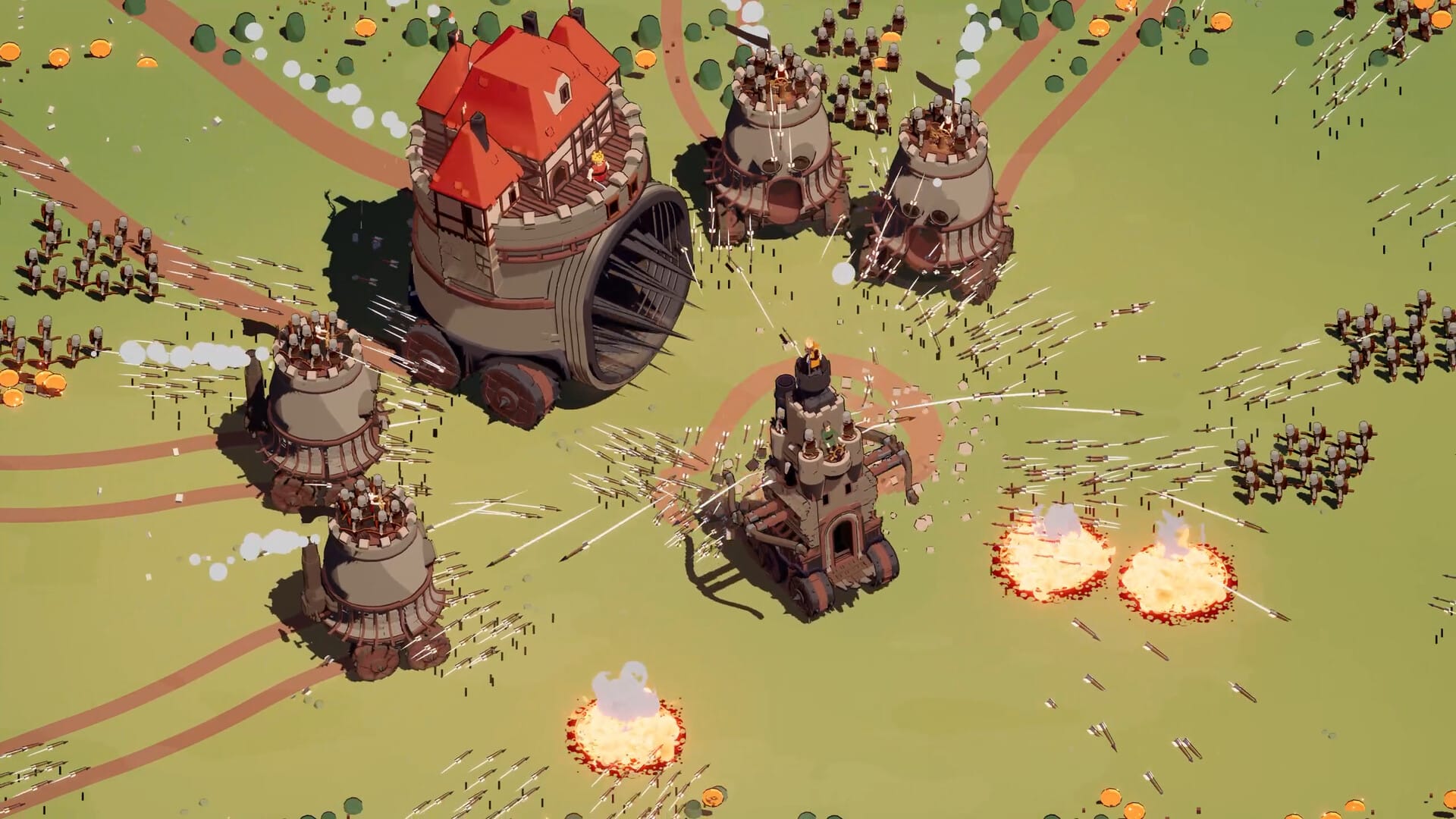
As a busy person, and also as someone who frequently opens their Steam library and then spends most of their available game-playing time trying to decide what to play, I’m a fan of roguelikes. I love a game I can play whenever I have a free moment, without having to remember a plot or keep learning new mechanics. So I really enjoyed the Wanderburg demo, a game where you play as a mobile building battling it out against increasingly terrifying fortress foes.
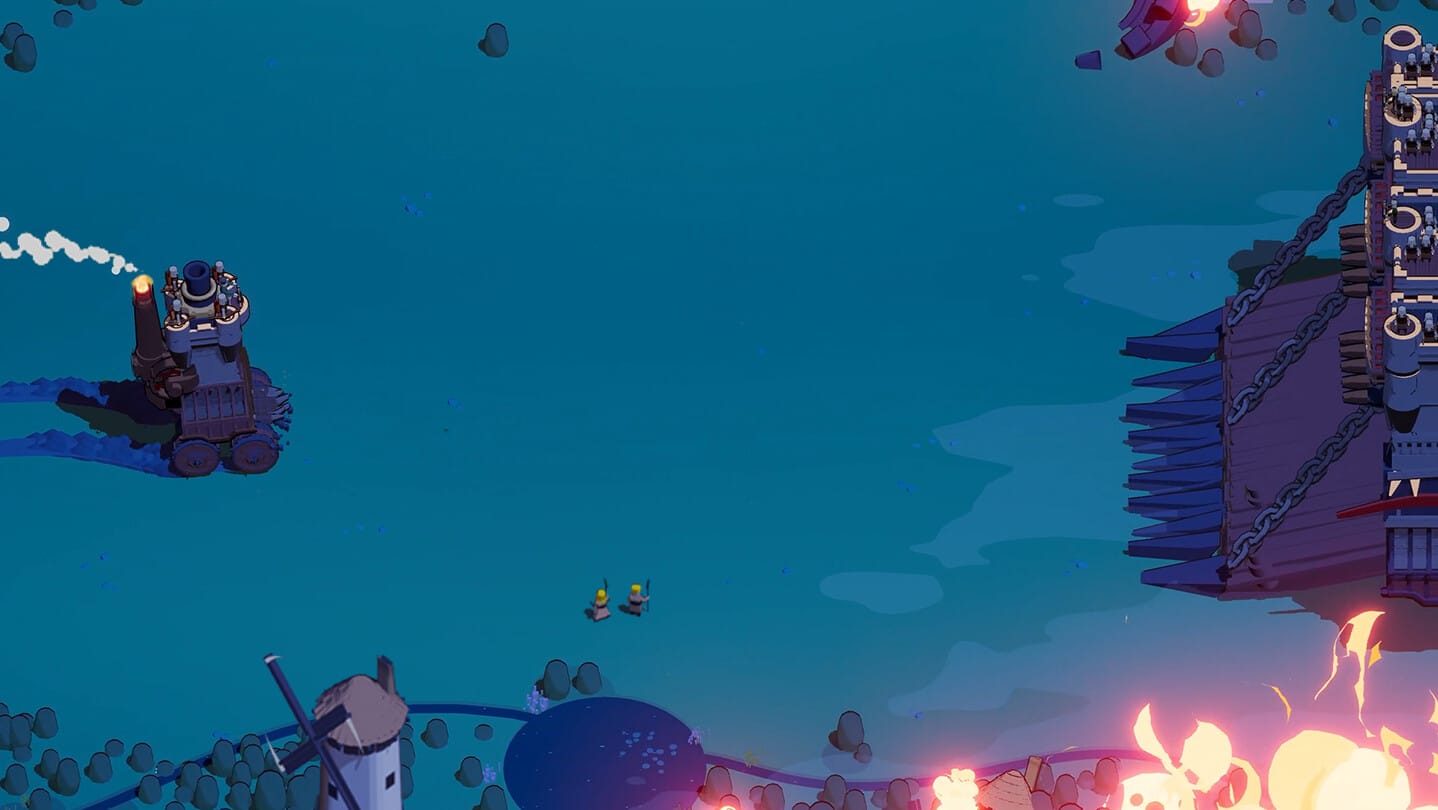
You start off as a pretty simple castle, with some auto-attacks like archers who fire small volleys of arrows and some basic cannons. At first you just rampage around the game’s arena, crushing sheep and fields and tiny soldiers. As you do, you get gold that lets you upgrade your auto-abilities or choose special ones that you trigger with a button press. I was particularly fond of the ability to drop a cluster of mines, given my favored strategy of running away once the enemies started getting bigger and tougher.
At a point during a run there’ll be a “swarm,” where a ton of enemies fill the screen, and there will also be a particularly nasty boss. Things start to get frantic, as your once-powerful building is now dwarfed by the even bigger, more powerful buildings coming to get you. Your building isn’t terribly fast, and your cannons and arrows fire from the side, so as a round ramped up in intensity I often found myself thinking most about my positioning, staying out of harm’s way while still getting some shots off, all while trying to roll over the smaller enemies to get the gold needed to get more abilities.
If you beat the boss, you’re rewarded with your castle getting bigger and more powerful, but of course the enemies and bosses get bigger and more powerful too. You keep going like that until you’re bested; it’s all a pretty simple idea, but there’s plenty of strategy to dig into based on which upgrades and abilities you choose.
Uh oh (Randwerk)
What I like best about Wanderburg is how ridiculous the whole thing feels: rumbling around as a castle covered in tiny guys, fleeing from the gaping maw of an oncoming fortress while sucking up a flock of sheep that are just doing their sheep thing in the middle of the battlefield, as rolling houses and windmills amble around. The way a round shifted from me being the biggest thing in sight to the smallest always kept me on my toes, and gave the game a comedic undertone that meshes nicely with its cartoonish art style. Wanderburg is set to come out in 2026.
Some weeks feel like a decade. This one sure did! At least I made time for some games. Let's share some stories.
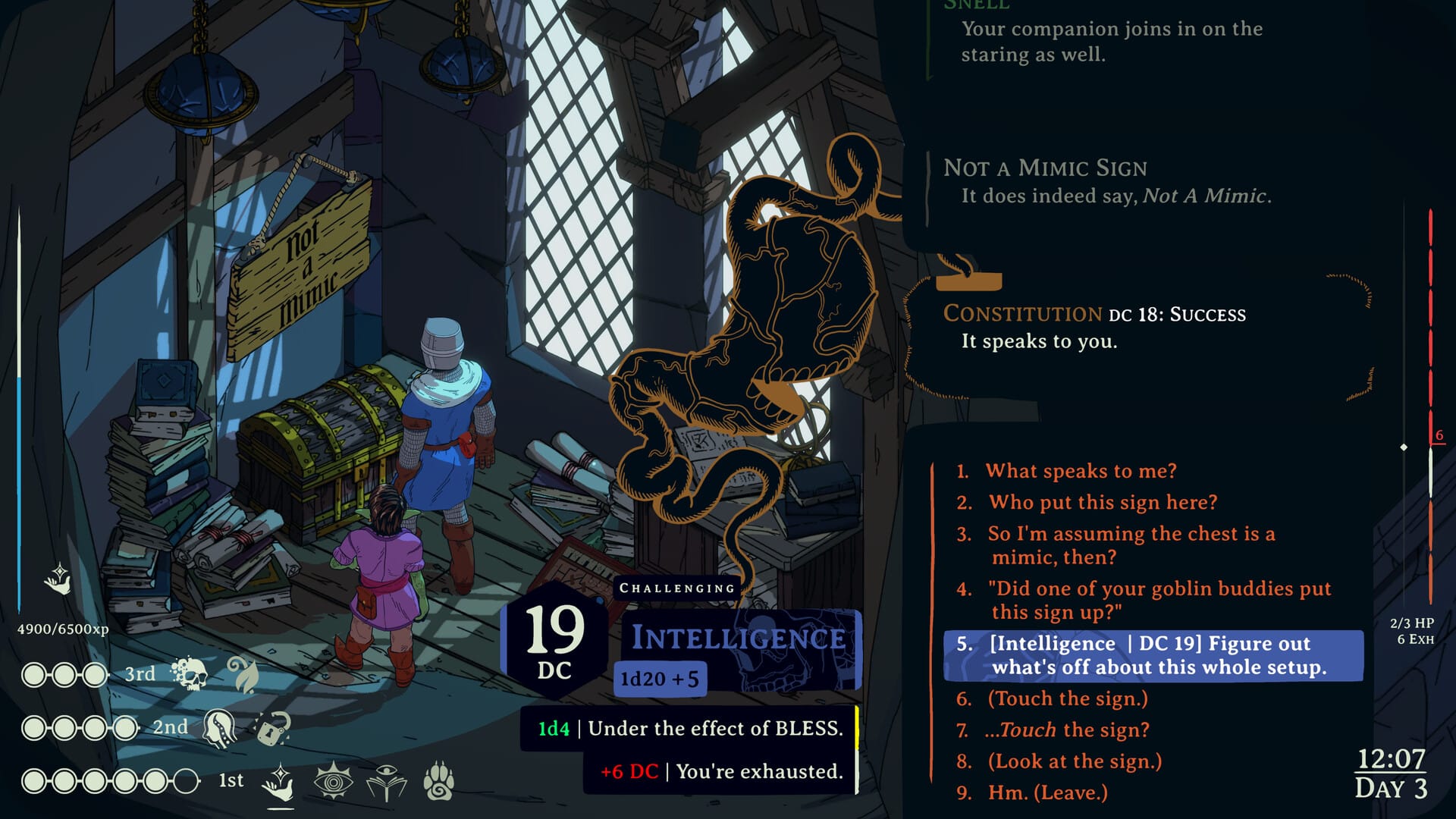
Although this weekend I anticipate that I’ll be trying out some Marathon with buddies, this week I took some time to try out Esoteric Ebb. It’s a game very clearly inspired by Disco Elysium, making it yet another successor to the influential socialist role playing game to throw on the pile.
What differentiates Esoteric Ebb from the other Disco successors is that it has no connection to the original developers of the game, and also takes more inspiration from the mechanics than the radical politics. That’s not to say that politics play no part in Esoteric Ebb—the main conceit of the game is that you have five days before the region's first election to finish a quest—just that they are not as immediately and overbearingly present in the game’s opening moments as they are in Disco.
Esoteric Ebb is a love letter to classic role playing games in general—Chris Person has likened it to Planescape: Torment, and yeah, the opening moments where you wake up on a slab seem like an obvious homage to that game. But it’s the way it folds in the narrative mechanic of Disco Elysium, where the various traits of your character argue with each other while your character makes decisions, that really excites me.
The strength of Disco’s narrative and politics sometimes takes precedence over the fact that the game was also so creative and interesting in its gameplay. I’ve been waiting for a game that made the smart move to adopt some of those flourishes, and I’m glad that Esoteric Ebb has taken those ideas and run with them.
Have any of you tried Esoteric Ebb? Is it a worthy successor to Disco Elysium? And what else have you all been playing this week?
KYOTO — Nintendo’s upcoming film based on The Legend of Zelda series has suddenly shifted gears to become an animated production, sources confirm.
“The images that have been released were created solely for marketing purposes,” said series creator Shigeru Miyamoto. “We never intended to pursue a gritty, realistic vision for this title. When I look at those photographs of Bo Bragason and Benjamin Evan Ainsworth, I am not inspired. To me, Link will always be an adorable little boy with a giant, round head and big beady eyes—not a handsome, British teenager. We’re going through the painstaking process of casting the Japanese voice cast right now, then, I don’t know—we’ll probably give the English-language roles to some YouTubers.”
Some fans of the series were unhappy with the film’s new direction.
“What the fuck are they doing?” said Steve Duncan, 35, who added that Link was his hero and role model. “They give us these pictures of a brooding, adult Link, and now they’re gonna turn him into a kid again? He already grew up by spending seven years in the Chamber of the Sages! Then again after leaving the Great Sea and founding New Hyrule. And again after defeating Vaati with the Four Sword. And probably after Spirit Tracks, too. But he’s a fully-grown, seventeen-year-old man, now!”
“This just isn’t what the fans want,” Duncan continued. “We love this franchise for its mature themes, like buying maps from a grown man in a green onesie who thinks he’s a fairy, or accidentally getting engaged to a fish princess. Everyone I know was excited to see Link, Zelda, and Ganondorf in real life. Zelda fans don’t sit around watching cartoons—that’s for babies. We are not babies. We are adults who write fan theories about how Termina is actually purgatory.”
Some entertainment industry analysts were not surprised by the development.
“Nintendo is not known for taking the expected path,” said Sam Thunnisen, an entertainment and new media journalist. “They’re always trying new things, and it’s not unusual for them to change directions suddenly. Miyamoto was excited about the fresh possibilities that the franchise could explore in a different medium. Modern gaming hardware is capable of creating images at least as realistic as Ben and Bo. However, try as they might, Nintendo hasn’t been able to replicate the visual charm of The Legend of Zelda sequences from The Super Mario Bros. Super Show. They see this as their chance to return to that glory.”
At press time, Nintendo was reportedly guarding against the film’s potential failure by beginning pre-production on a separate, live-action version of the film, starring Henry Cavill as Link.
Browsing LinkedIn last July, Amber Warnock-Estrada saw a call for "gaming writers" who could "create news content for a well-established website". The call did not state what “well-established website” the writing would be for, but the 21-year-old from Arizona applied, having recently fallen in love with games journalism after a stint as Features Writer at Game Rant.
After a couple of emails, Warnock-Estrada landed an interview with the man who had written the LinkedIn post, Lee Astley. She recalls the interview as being fairly normal: The pair spoke via Zoom in a conversation that lasted about half an hour. Astley said she could start, on a one-week trial, right away. The website she'd be working for, she quickly found out, was called GamesHub. Warnock-Estrada had barely heard of it, but keen to establish herself in a shrinking games writing scene, she jumped at the chance.
Almost immediately, things seemed off. She never saw a contract. Every day before she could start work, she needed to ask an IT person in Slack for a new password to log in to Wordpress, the site's content management system. She was expected to perform all editorial duties: Write the story, find the imagery to accompany it, come up with a headline, then hit publish. There were no secondary checks. Once published, she would put a link to the story in an Excel spreadsheet, as directed by Astley.
Astley told Warnock-Estrada that she'd be required to produce about six stories across an eight hour shift and would be paid $135. (The rate, she says, was better than what she had been paid for previous games writing jobs.) Her articles first appeared on GamesHub on July 22, 2025. In the 72 hours after starting, she wrote 15 pieces for the site, covering everything from the NSFW games debacle to patch notes for Marvel Rivals.
But her suspicions about the company behind GamesHub grew quickly. She noticed the site seemed to be "deeply entrenched in gambling and crypto stuff"; GamesHub's homepage directed readers to various online casinos, though this aspect of the website didn't come up in her interviews with Astley. She also felt isolated and was not introduced to any coworkers during her trial period. Most of all, there seemed to be secrecy around GamesHub's owners.
While GamesHub might not be a household name, in the games media desert that is Australia — where you can count the full-time writing jobs on one hand — it was one of the few oases. It was spun up by media network Creative Hubs Group in 2021, quickly establishing itself as a leading voice by covering everything from Aussie indie gems to industry disputes and Indigenous representation, snagging a couple of local awards along the way. On May 30 2025, Creative Hubs Group announced it had sold the site. "Under its new ownership, it will belong to an organisation that is not a digital media publisher", the press release stated. It did not detail the new owners. For a month, the website was dormant.
When the site sputtered back to life in mid-July, it had changed. Sprinkled in amongst the usual gaming news were lists covering the best online casinos and crypto gambling websites. The menu bar had its own tab for gambling. An editorial policies page appeared, emphasising expertise in "online casinos, sports betting, and poker" and lacking any discussion of video games.
The editorial shift was similar to the one that occurred at AdventureGamers.com, a beloved, 27-year-old genre-specific games website sold under similar circumstances in February 2025. Kotaku reported in June 2025 that the company behind that purchase was known as “Clickout Media”.
Aftermath has confirmed via multiple sources that Clickout Media purchased GamesHub in May 2025. But the Australian outlet is just one of many linked to Clickout Media, which has recently found itself at the centre of the gaming world's attention after another site it owns, venerable UK outlet Videogamer.com, was alleged to have generated a review for Resident Evil Requiem with AI.
The company, which bills itself as a “marketing agency specializing in web3, financing, and tech" is behind a raft of legacy games media sites pivoting to crypto and gambling content over the last year. According to a talk by Dom Needler, a senior manager of analytics, reporting and operations at Clickout Media, the company both partners with, and owns and operates, a suite of websites. Sometimes the distinction between the two is not explicitly known, even to staff. Little public information is available about the sites it owns, and typically former owners do not publicly disclose who purchased their sites.
Over the course of an eight-months long investigation, Aftermath spoke with more than two dozen employees, current and former, associated with Clickout Media, many of whom wished to remain anonymous. We have been able to verify Clickout Media is linked to famed outlets such as The Escapist and Esports Insider, according to former employees. Aftermath has also been able to verify it owns esports-focused sites Esports News UK and Esports.net. It also owns two Dutch gaming websites, pu.nl and PlaySense, which were purchased by Clickout Media in early 2026. We have also uncovered evidence of AI-generated profile images and AI agents used for generation of content at Clickout Media-owned websites.
Clickout Media's empire is sprawling, making it hard to define its boundaries. Publicly available information of employees links them to both "Clickout" and “Clickout Media”. During the course of our investigation, the website Clickout.comwas rebranded to “RevenuePass”, though the Wayback Machine shows the old brand up until October 2025. The Wayback Machine shows clickoutmedia.com also featured that same logo up until April 2025. We will refer to the entity operating video games websites as “Clickout Media” throughout this piece for clarity and consistency.
Aftermath approached Clickout Media numerous times for comment about whether and when it purchased GamesHub, as well as whether it owns The Escapist, Esports.net, and Esports Insider. Aftermath also asked about gambling and casino content on these sites, and whether the company is aware ofpractices that contravene Google's Site Reputation Abuse policies.
Aftermath also asked whether Clickout Media advises writers not to speak of its sites’ connections to Clickout Media, and any potential use of AI-generated author images that came up in the course of our reporting. Aftermath contacted Clickout Media through its website and put questions to seven editors and managers via email or LinkedIn, including the Head of News, the former Managing Editor of Gaming at The Escapist, the Gambling Head Analyst, the Head of Analytics & Automation Operations, a Managing Editor of Esports.net, a Senior Social Media Manager, and an SEO content editor and Senior Editor publicly listed as Clickout Media employees on LinkedIn.
We have not received a response.
Fully Gamblomatic
The 'gamblification' of video game and esports websites takes advantage of a practice known as "Parasite SEO", which is a way to "leverage the authority of an established website to rank for competitive keywords" on Google, according to marketing and SEO agency ahrefs. In short, a company purchases or partners with high-ranking, trustworthy domains that Google surfaces in prominent spots of its search rankings. It begins adding lists and articles of the company's choosing; in the case of GamesHub and other sites associated with Clickout Media, lists of gambling and crypto casinos.
The original website — the host — provides all of the benefits of high authority on Google, and the parasite gets a free ride. What that means is, depending on where you are in the world, when searching for "crypto casino", you might find GamesHub on the first page of results, despite it having been a video games focused website for five years.
Parasite SEO is essentially a shortcut, one that might get your content ranking at the top of Google in a few weeks, but it can contravene the rules outlined in Google's "site reputation abuse" policies. Those policies prohibit the use of third-party content that attempts to take advantage of a host site's "ranking signals". For example, Google says that "a medical site hosting a third-party advertising page about ‘best casinos’” would violate the policy.
However, things get a little murkier if the company owns the website, according to Lars Lofgren, an online marketer who has also investigated parasitic SEO practices. "[In] the SEO industry, not everyone has the same exact definition for Parasite SEO", he says. If a company purchases a website and wholesale changes the content it's publishing, it may not be a classic case of parasite SEO. Another SEO expert, based in Malta and who wished to remain anonymous, suggested Clickout Media is "definitively the biggest and the most successful parasite SEO affiliate network in igaming".
Clickout Media has been publicly linked to igaming and tech websites over the past two years, but has recently turned its attention to highly authoritative video game websites. On GamesHub and other gaming sites, Clickout Media maintains some of the legacy content the sites were known for while beginning to populate them with crypto casino and gambling pages and backlinks. For instance, GamesHub still produces video game news, but also includes pages on the "Best Online Casinos Australia 2026" and "Best Online Casinos in Ireland 2026". Similarly, Videogamer includes pages for "Best Skrill Casinos in the UK in 2026" and "Best Betting Sites Not on Gamstop UK 2026". (Gamstop is a UK-based company that helps people get their gambling under control by letting them block their access to gambling sites.)
Lofgren says GamesHub was "ranking better than it ever has in at least the past two years" in August 2025, just two months after it added gambling and casino content. His examination of the site, using ahrefs, shows that traffic flowed to it through keywords related to gambling. "The bulk of the traffic increase is coming from casino related pages that are solely designed to make money via affiliate offers", he wrote to Aftermath.
In August 2025, Lofgren noted that if the new owners became too focused on revenue-generating keywords, they could run afoul of Google, which could lead to severe penalties. "If [Google] catches it, I'd expect them to issue a manual penalty and remove the domain from Google's index", he said.
In response to questions about GamesHub on September 10, a Google spokesperson told Aftermath, “While we aren’t able to comment on a specific site’s ranking on Search, our policies prohibit publishing content at scale for the primary purpose of manipulating search rankings”. An analysis of data on ahrefs by Lofgren showed that by September 23rd, GamesHub's organic traffic had plummeted by 50 percent, but has remained stable since.
Whether considered parasitic SEO or not, Clickout Media's strategy has seen great gains in traffic at GamesHub, according to ahrefs analysis. That's a flaw Lofgren sees with Google's policies.
"Should anybody be able to just buy a gaming website and then start ranking pretty easily for online gambling and casino related keywords?" asks Lofgren, before answering his own question, "Like, no, absolutely not. That should not be easy to do."
Become Human
There's no need to belabour the fact the gaming press has been in freefall. Many popular sites have seen search rankings demolished by Google algorithm updates that decimated organic traffic. Layoffs have hit the likes of Polygon, IGN, Eurogamer, and many, many more sites. Games writing jobs barely exist. In such an environment, it's no surprise to see owners of sites like GamesHub or The Escapist exit. These factors create the perfect conditions for parasites - and for the potential for exploitation of games writers who are inexperienced, desperate or looking for work.
Warnock-Estrada was not the only writer to respond to the initial call at GamesHub. Max Moeller, a freelance writer from Chicago, and John Hansen, creator of independent video games site GamesSandwich, were also among the first writers to onboard after GamesHub came back to life. Moeller and Hansen produced more than a dozen articles each in a few days but, like Warnock-Estrada, became suspicious of how GamesHub was being run.
Suspicions were raised further when Warnock-Estrada was asked to fill out her author profile on the site. As she uploaded an image of herself, she stumbled upon a gallery of portraits, all of which she believed were AI-generated headshots. "My guess is they might be creating fake profiles", she told Aftermath in July 2025. Several of the headshots found by Warnock-Estrada featured on the "Meet the Team" page at GamesHub, which lists the site's contributors.
A gallery of portraits from the GamesHub content management system, shared with Aftermath in July 2025
One writer, Maelis Hartley, has published more than 100 articles on GamesHub since July 22, 2025, all in the gambling and online casino space. The X account linked to her profile was created in July 2025 and first started posting that same day. Her bio suggests she is a "seasoned writer with 10+ years in games, tech, and interactive media". Aftermath could not locate LinkedIn profiles, personal websites or other accounts for Hartley online, an anomaly for a real human writer with ten years of experience.
The only response to Hartley's first X post, "a deep dive into the Best Online Casinos USA 2025", comes from an account under the name Ella Wren. "Nice one, Maelis! Really solid roundup", the account replies. Wren's profile lists them as an editor at GamesHub; the X account was also opened on July 25 and, like Hartley’s, its first post is a GamesHub story about casinos. Wren's image appears in the gallery of portraits discovered by Warnock-Estrada.
Since beginning this investigation in July 2025, Maelis Hartley's profile photos have changed. At first, she was a brunette woman with a particularly long neck. By August, Hartley's headshot featured a woman with different facial features, such as a larger nose and different eyes, as well as short cropped hair.
Left: An image of Maelis Hartley as it appeared in July 2025 on GamesHub.com (via the Wayback Machine). Right: An image of Maelis Hartley that appeared on GamesHub from August 2025 onward.
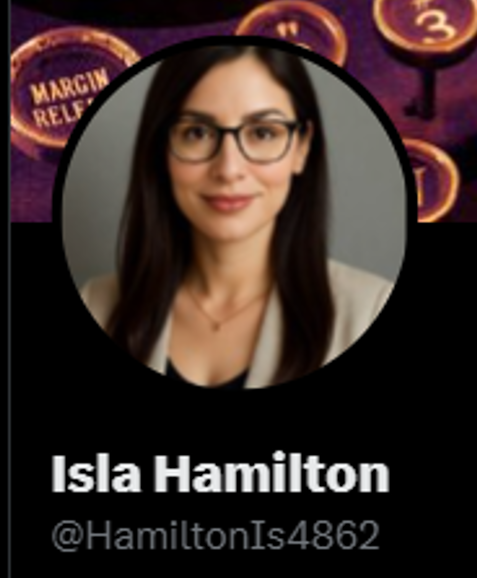
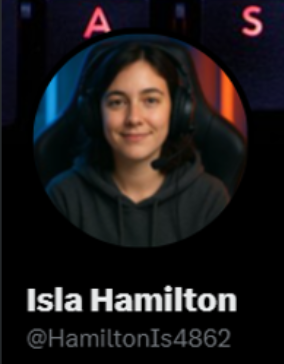
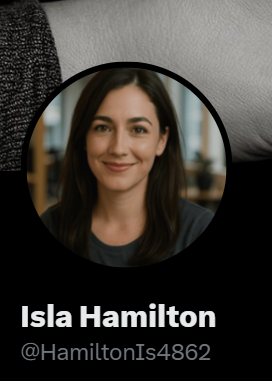
This profile transformation also occurred with GamesHub writer Isla Hamilton, her mouth and eyes changing shape. There is no clear indication as to whether AI was used in the creation of the articles themselves. These authors do not appear in screenshots provided to Aftermath of the Clickout Media Slack channels for GamesHub.
Isla Hamilton's Twitter profile. Left: July 2025. Middle: October 2025. Right: Current.
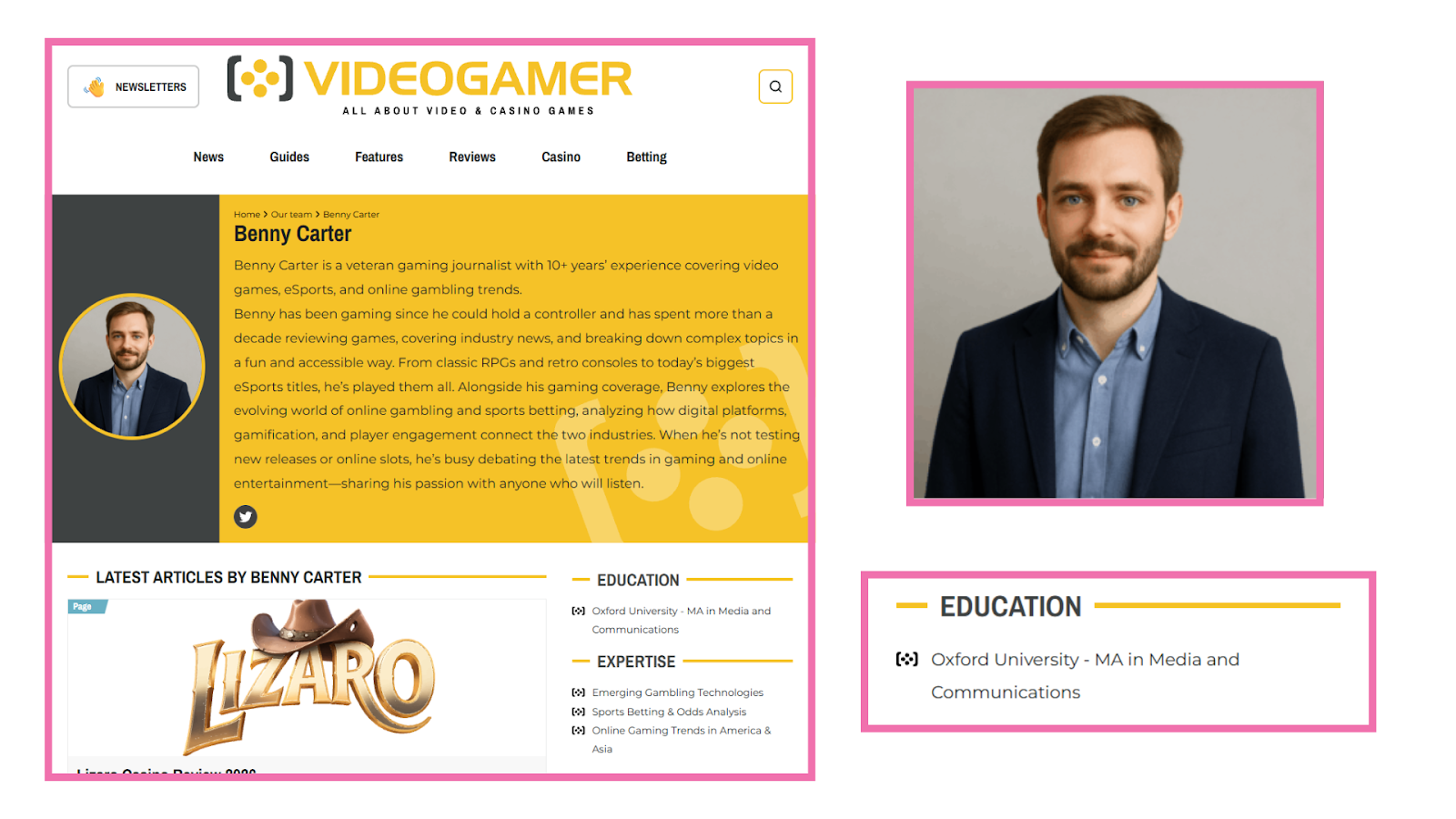
At Videogamer, another Clickout Media site, author profiles have similar characteristics: They were created in late October 2025 and link out to generic, mostly empty Twitter profiles. For instance, Benny Carter claims to be "a veteran gaming journalist with 10+ years' experience", with an "MA in Media and Communications" from Oxford University. In November, a member of the Information Compliance Team at the University told Aftermath they were "unable to find any record of the individual on its systems". They separately confirmed that the University does not offer any Master of Arts (MA) courses, and "is not aware of any BA, MSt, MSc, or MPhil course named 'Media and Communications' currently or historically offered by the University".
Left, a screenshot of Benny Carter's author page from November 2025. Right, Carter's education listed as "Oxford University - MA in Media and Communications".
Behind the scenes at GamesHub, in the company Slack channels, Moeller and Hansen were asking questions of Astley, but he didn't respond. This, combined with their lingering suspicions around AI authors, spurred the writers into action. On July 29, all of the stories on the front page of GamesHub were edited to deliver the same headline: "this site is a scam". Several other articles on the site were edited, including one to say "GamesHub is run by AI accounts and is scamming writers".
On July 16, Aftermath asked Aleksha McLoughlin, listed as Clickout Media's Managing Editor of Gaming, if she would detail plans for the site. We asked again for comment on July 30, after the website was defaced. We also asked Lee Astley, Head of News, and Neil Roarty, the Marketing and US Gaming Editor, for comment on Clickout Media's plans for GamesHub in July and November 2025. We asked again in February 2026. We did not receive a response.
On July 29, every story on the front page of GamesHub was edited to read "this site is a scam".
The act of defiance was brief. Within about an hour, the site had been reverted and all the articles had been restored. Moeller, Hansen and Warnock-Estrada stopped publishing with Clickout Media from that day forward. Moeller took credit for altering the site in a Youtube video posted on July 31 featuring all three authors.
Moeller told Aftermathhe has held positions at both crypto and gaming sites. He said that writers at GamesHub were likely paid for their work but added the position "raised so many red flags" because it lacked the organisation and leadership he'd been familiar with at other outlets.
"[At those sites] there were style guides, various editors, people with passion who were excited to talk to you and explain how things worked. There was always someone around to answer questions, to look over your writing", he said.
Moeller was not paid after abruptly quitting. According to documents seen by Aftermath, Astley suggested Clickout Media would pay the writers who made the video what they were owed and, in turn, asked for "any public-facing content relating to GamesHub that may be misleading or inaccurate" to be removed. The email specifically references the YouTube video posted on July 31, 2025. The writers never accepted those terms and were not paid for their work.
Speaking to writers affiliated with Clickout Media websites, a constant sentiment is that the conditions, and pay, were better than they'd received working at gaming sites operated by competitors, such as Valnet and Gamurs. And while multiple freelancers expressed discontent at the addition of gambling content, some opposing it on moral grounds, they said they've had positive experiences with editorial teams at Clickout Media's gaming sites because it provided stable work and always paid on time. However, one former employee said that Clickout Media "don't care about gaming journalism". "They are in the business of making money and they are really good at that", they said.
Those who have not written for GamesHub for years have also been impacted by the sale. Almost all of the legacy news articles the site had written before being sold to Clickout Media were edited to include links to the site's gambling and casino articles.
Chris Button, an Australian tech journalist and former contributor, wasn't pleased to see his old profile alongside the AI authors. All of hisformer articleswere editedto include closing sections pointing to casino and betting guides. He attempted to have his author profile removed by emailing the new management of GamesHub, but he never received a response. However, he no longer appears on the Meet the Team page. Button is disappointed with what the site has become. "Seeing GamesHub transformed into a site promoting gambling is devastating, not just for those who wrote for the site, but for the industry the publication championed", he said.
Another Australian journalist, Meghann O'Neill, had her bylines removed from GamesHub articles after Clickout Media's acquisition. On March 18, 2024, the Wayback Machine shows O'Neill's story on Planet of Lana with her byline. But the byline was changed to another writer, Peter Morgan, by December 2025. Morgan's profile shows he started writing for GamesHub in August 2025, but his stories include pieces from years earlier. One former GamesHub editor confirmed they never commissioned Morgan for stories in 2023 or 2024. (Peter Morgan did not respond to a request for comment.)
After Aftermathraised questions about the author profiles with former GamesHub owner Creative Hubs Group in August 2025, we were told "all current and former employees have been removed from the site, at our insistence" by the Chief Operating Officer Mimi Curran. However, subsequent to Curran's comments, Clickout Media added additional writers to the Meet the Team page, including journalists once employed as freelancers by GamesHub but no longer working at the site, including Alice Clarke, Alessando Fillari, Courtney Smith and Jam Walker. These writers remain listed as contributors though they have not written for the site since its sale.
One of those freelancers, Fillari, was annoyed with the changes. "Being a freelance writer and finding stability in this line of work is incredibly challenging, and having a reputation for delivering honest and reliable work is everything", he told Aftermath. "It's very frustrating to see the new owners of GamesHub, a once-promising games media site, deface my older work to include gateways to exploitative and toxic content that I do not wish to be associated with".
Clickout Media staff asked contributors not to publicly link personal profiles, like LinkedIn, with GamesHub and other properties. Warnock-Estrada told Aftermath she was "encouraged to not reference any connection between Clickout Media and GamesHub, even when I have not expressed any intent on doing so". In screenshots of Clickout Media's Slack obtained by Aftermath, when one GamesHub contributor posted a screenshot of this author's LinkedIn message requesting comment, Neil Roarty responded with the advice to "Ignore" and "Don't ever reply to anyone asking about any sites". Roarty did not respond to requests for comment.
There are recent signs Clickout Media may be changing its strategy, shifting away from freelance work and increasing its reliance on AI. In February, it began a major round of layoffs, according to multiple staff familiar with the situation and reported on by Insider Gaming and others. Cat Bussell, the Features Editor at Videogamer, told Aftermath she was offered a role as an "AI editor", though Clickout Media did not provide any specifics about the role; Insider Gaming suggests “the company is making a heavy pivot to AI content”. She, like many other journalists at Clickout Media, refused to take the offer. "It's unethical in the extreme," said Bussell, "AI is incapable of criticism or meaningful analysis. Its use by media companies denigrates us all".
At GamesHub, the only stories published since February 13 have been by Tanaka Haruto, an author whose profile photo filename contains the phrase "cropped-Gemini_Generated_Image". Videogamer's news feed also contains a coterie of authors, such as Benny Carter, and others, such as Shooter Orson and Caroline Wilson, with what appear to be AI-generated profile photos. Brian Merrygold, another author at Videogamer, has a profile image url titled "ChatGPT-Image-Oct-20-2025-11_57_34-AM-300×300". The timing of creation, based on the timestamp, lines up with when Clickout Media began running Videogamer.
In addition, Aftermath can confirm Clickout Media sites have access to bespoke AI agents that can "emulate the style" of key personnel at its gaming websites, according to multiple sources. Aftermath was provided access to one agent, created for use at one of its major gaming websites. Though we could ask the agent about why it was created – and its generated responses suggest it was instructed to create articles related to casino news and game release coverage – we could not verify who created it.
Aftermath has also viewed and verified screenshots of Clickout Media's work management platform, Monday, which shows a 'traffic light' system for determining how much AI is included in a specific article, from green "AI Minor", to yellow "AI Standard", to red "AI Significant". Several game guides appearing on The Escapist are flagged as “AI Significant”, while game news around topics such as Sony's decision to close Bluepoint are labelled “Human Dominant”.
Aftermath understands The Escapist continues to host a majority of "Human Dominant" content, according to screenshots seen by Aftermath; however, AI has begun to creep into its workflow. We asked Oliver Ring, listed as Managing Editor of Esports.net, about the use of AI agents at Clickout Media. He did not respond to a request for comment.
On February 26, after discovering a Videogamer review for Resident Evil Requiem was AI-generated, Metacritic removed the website from its database.
The death of GamesHub — and it is a death, despite the gaming news it still publishes — is another loss in the ongoing collapse of global games media. Same goes for sites like Videogamer. But the reasons for that collapse can't be pinned on a single entity. Yes, a relatively-unknown, secretive-yet-massive affiliate marketing company has certainly altered the landscape, taking control of beloved sites and filling them with crypto casino links and gambling stories. But there's also Google, whose search engine monopoly has shaped journalism for more than a decade, negatively impacting traditional revenue streams for global games media.
Then there's the media companies, outside of Clickout Media, that must also bear some responsibility for what becomes of games media. Creative Hubs Group, the company that sold the GamesHub brand and all of its assets, maintains the sale was right for its future. Curran, the CHG COO, told Aftermath,"we remain confident that divestment of the GamesHub brand was the right decision for the continued growth of our business".
GamesHub, then, becomes another casualty in the ongoing contraction of games media. That line about growth? That's the same thing Jim Bankoff, Vox CEO, said when Vox sold off Polygon, minus most of its staff, to Valnet: "This transaction will enable us to focus our energies and investment resources in other priority areas of growth across our portfolio". And it's what Gamurs Group said when it sold off The Escapist and Dot Esports, too: "These sales mark a pivotal moment in the company’s evolution and long-term growth strategy". Growth is a company mindset, one that doesn't seem to align with growth for staff – the games journalists who find themselves in ever more precarious situations with every sale – nor with readers, which are slowly seeing reputable, quality video games outlets disappear, devoured and replaced with crypto casino best lists, gambling coverage, and AI authors.
 Log in